Modern outdoor spaces are not just bare grounds or simple backyards. House owners and estate developers desire the outdoor spaces to be friendly, functional, and eye-catching. Landscape designers are the ones who come up with the artistic ideas to beautify the spaces and make them very useful as well. The design element that has been gaining steady popularity is the incorporation of stepping stones in the design.
The stepping stones are a simple yet effective design element in the creation of a beautiful outdoor space. Unlike the conventional paved walkway, stepping stones provide the outdoor space with the opportunity to breathe while at the same time providing direction within the space. This is often done through the incorporation of outdoor stone steps and pathways.
Let’s explore how landscape designers use stepping stones to add character and functionality to outdoor environments.
Why Do Landscape Designers Prefer Stepping Stones for Garden Pathways?
Stepping stones not only bring practical benefits but are also very versatile in terms of design. This is the reason why many landscapers also enjoy working with stepping stones. Instead of putting concrete or stones over the entire surface, stepping stones are a simple solution that is quite nice with the look of the grass, gravel, or mulch.
The method is useful for preserving the natural look of the outdoor space, at the same time providing a walkway or path for those who want to use it. Stepping stones may be used to join patio, garden seating, and backyard spaces in residential landscaping, or to guide visitors through landscaped courtyard or green zone spaces in commercial landscaping.
Stepping stones allow the designer the leeway to be creative in the use of different shapes. Whether the intention is to lay out a formal pathway or simply a garden trail, stepping stones offer the designer the scope for experimentation that other materials cannot provide.
How Do Stepping Stones Add Visual Interest to Outdoor Spaces?
Besides just adding plants and flowers, adding other materials like stones and pathways is also a way to enhance the look and feel of an outdoor space. When large lawn areas are broken up by stepping stones, not only can one create a path for people to follow, but also provide an element of structure and movement to the outdoor space.
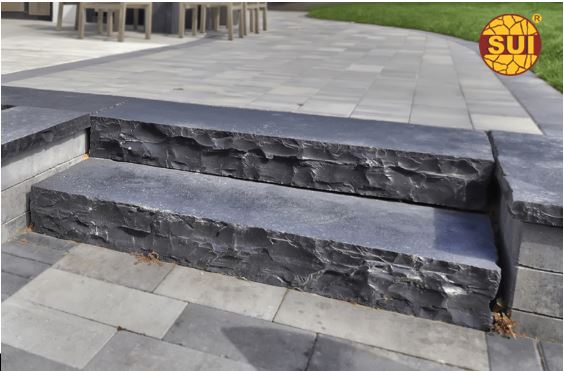
Besides guiding movement, outdoor stones can also be used to highlight special areas in the landscape, such as a seating spot, a garden corner, or even a water feature. The variation in elevation in outdoor spaces makes the introduction of outdoor stone steps very valuable, as the walk becomes more interesting.
Another reason why stepping stones stand out from the outdoor space is the variation in their shapes and textures. A rustic look is obtained when using the irregular stones, whereas the more square stones are used to create a modern look.
Where Are Stepping Stones Most Commonly Used in Landscaping Projects?
The versatility is the reason why landscape designers use stepping stones in many different outdoor settings. Here are some of the most common ways they are used in landscaping projects:
Some of the most popular uses of stepping stones include:
- Garden Pathways – Stepping stones are great for creating natural paths through the garden while helping protect plants and grass from constant foot traffic.
- Backyard Walkways – They can also connect different areas of the backyard, such as patios, seating spots, or fire pit areas, making it easier to move around the space.
- Poolside Access Paths – Around pools, stepping stones provide simple walking paths without the need to cover the entire area with paving.
- Courtyards and Outdoor Retreats – In smaller outdoor spaces, stepping stones add a neat and elegant touch without making the area feel crowded.
How Do Designers Combine Stepping Stones with Other Natural Stone Elements?
Designers pair stepping stones with elements like retaining walls, water features, and other stone details to enhance the overall design. In sloped gardens, they can guide people toward outdoor stone steps, making it easier and more comfortable to move between different levels of the landscape.
What Do Designers Look At When Planning a Stepping Stone Pathway?
Landscape designers often think of a few main things when they design and put in stepping stones.
- Spacing Between Stones – The distance between stepping stones should be such that it is a normal step while walking on the stepping stones.
- Stone Shape and Size – The size of stepping stones might affect the design, whether it is a traditional, modern, or rustic design.
- Ground Material – Stepping stones might be used on grass, gravel, sand, or mulch, depending on the design.
- Connection to Other Features – Stepping stones might connect to a patio, seating areas, or Steps, so it is important to design it in a way that it connects well with other features in the landscape.
Why Are Stepping Stones a Timeless Choice in Landscape Design?
It is worth noting that, although trends in landscaping come and go, stone features have always been and will always be in fashion. This is especially true for stepping stones, which have a timeless look and feel genuine, thereby fitting perfectly into their surroundings.
Unlike other materials, which tend to look old after some time, stone features tend to get even more elegant with time. This is a major reason why they have been and will always be reliable options for designers working on projects that have to last longer than others.
Another reason why stone features, especially stepping stones, have been and will always be reliable options for designers is that they go well with almost every type of landscape design. Whether it is a residential home, a countryside home, or simply a commercial property, stone features will always be an easy addition, especially when combined with features such as stone steps.
Conclusion
Stepping stones might be an element of small significance in the overall design of the landscape, but they contribute in a substantial way to the development of the character of the space. They contribute to the overall development of the space in an effective way by controlling movement, providing visual interest, and blending in with the natural surroundings of the space.
In cases where the stepping stones are combined with other features like Steps and stone steps, it is possible to achieve the aspect of flow in the space. This simple feature has continued to remain a viable option for designers, contractors, and even architects who want to come up with well-thought-out and unique spaces.