Choosing the right bonding material is one of the most important decisions before beginning a tiling project. A suitable tile chemical helps create a secure connection between tiles and the underlying surface while supporting a neat, durable finish. However, adhesive selection should not be based only on price or convenience.
Tile type, surface condition, location, moisture exposure, tile size, and application method all influence the final result. Understanding these factors before installation can help homeowners, contractors, and builders avoid loose tiles, uneven surfaces, and unnecessary repairs.
What Is Tile Adhesive?
Tile adhesive is a specially formulated material used to fix tiles securely to walls or floors. Compared with traditional cement-based fixing methods, modern adhesives are designed to provide controlled bonding, easier application, and suitability for different tile and substrate combinations. Depending on the formulation, an adhesive can contain cement, polymers, aggregates, and performance-enhancing additives. These components influence adhesion, flexibility, workability, and resistance to moisture or temperature changes.
Why Tile Adhesive Selection Matters
The adhesive forms the connection between the tile and substrate, so its performance directly affects installation quality. An unsuitable product can contribute to poor bonding, tile movement, cracking, hollow spots, or debonding. Moisture and temperature variations can further increase stress on an installation.
A suitable adhesive helps create consistent contact between the tile and substrate and provides enough working time for proper positioning. For this reason, adhesive selection should happen before purchasing tiles or beginning surface preparation.
Consider the Tile Type
Different tiles have different absorption levels, weights, dimensions, and surface characteristics. Ceramic tiles may have different requirements from vitrified tiles, porcelain, or natural stone. Large and heavy tiles can place greater demands on the bonding system, while low-absorption tiles may require an adhesive formulated for reliable adhesion.
Before choosing a product, check its recommended tile categories and application requirements. Tile dimensions also matter because larger formats require careful coverage and alignment. Matching the adhesive to the tile helps reduce the risk of inadequate bonding.
Evaluate the Installation Surface
The substrate is equally important. Walls or floors should be structurally sound, clean, dry, and sufficiently level before adhesive application. Dust, grease, loose material, paint residue, or surface contamination can interfere with bonding. Cracks, holes, and major irregularities should be addressed before tiling begins.
A properly prepared surface allows the adhesive to make consistent contact with the substrate. Uneven surfaces may cause variations in adhesive thickness and create unsupported areas beneath tiles. Surface preparation is therefore an essential part of achieving reliable installation.
Check Moisture and Environmental Conditions
The installation location should influence adhesive selection. Bathrooms, kitchens, balconies, terraces, and other areas exposed to water require products suitable for moisture-prone conditions. Outdoor installations may also experience sunlight, rain, temperature fluctuations, and movement.
Consider whether the adhesive is intended for interior, exterior, wet-area, wall, or floor applications. In demanding environments, selecting a product with appropriate resistance and bonding characteristics can help maintain tile stability. Always follow the technical recommendations provided for the specific adhesive and installation condition.
Understand Adhesive Types
Tile adhesives are available in different formulations for varied applications. Cement-based products are widely used and are generally mixed with water before application. Polymer-modified formulations can provide improved bonding and flexibility for selected applications. Epoxy adhesives are another category, often considered where high chemical resistance, water resistance, or demanding performance is required.
Consider Application and Working Time
Installation efficiency depends partly on how the adhesive behaves during application. The product should be easy to mix, spread, and comb with an appropriate notched trowel. For powder-based adhesives, following the specified water ratio is essential. Adding too much or too little water can affect consistency and performance.
Working time and open time should also be considered. Prepare only the quantity that can be applied within the recommended period. If adhesive begins to dry on the surface before tiles are placed, bonding may be compromised. Following manufacturer instructions helps installers work within the intended performance window.
Use the Correct Tools and Technique
A notched trowel is commonly used to create uniform adhesive ridges. The appropriate notch size depends on tile dimensions, substrate conditions, and product recommendations. Spread adhesive over a manageable section rather than covering a large area that may exceed its open time.
Press each tile firmly into the adhesive bed and make adjustments while the adhesive remains workable. Tile spacers can help maintain consistent joints, while a level can be used to check alignment. Remove excess adhesive from joints before it hardens, especially where grout will later be applied.
Search for Reliable Suppliers
When looking for tile adhesive manufacturers near me, do not assess suppliers only by location or price. Consider product range, technical information, application guidance, quality standards, availability, and suitability for your project. A reliable supplier should provide clear product specifications and recommendations for different tile and substrate conditions.
Reading product instructions carefully also helps clarify coverage, mixing, curing, storage, and recommended application conditions before work starts, while helping installers avoid mistakes.
Avoid Common Installation Mistakes
Several preventable mistakes can affect tile performance. Applying adhesive over a dirty surface, ignoring recommended mixing ratios, spreading too much material at once, using an unsuitable trowel, or failing to check alignment can reduce installation quality.
Another common issue is disturbing tiles before the adhesive has sufficiently set. Grouting too early can also interfere with the bonding process. Allow the adhesive to cure according to product instructions and protect the newly installed surface from unnecessary movement or moisture exposure during this period.
Conclusion
Tile adhesive helps create secure, durable, and visually consistent tile installations. Choosing the right tile chemical requires considering tile type, substrate, moisture exposure, environmental conditions, formulation, working time, and application needs. Proper surface preparation and installation are equally important. Evaluating these factors beforehand helps homeowners, contractors, and builders achieve reliable results while reducing loose tiles, uneven finishes, premature repairs, and maintenance requirements.
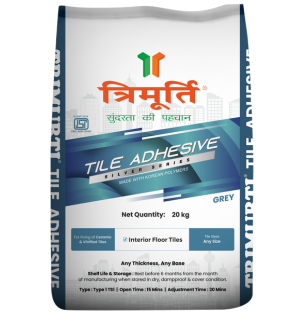
For reliable tile installation, finishing, and maintenance across different projects, Trimurti offers tile and stone fixing solutions designed for varied installation needs. Its range includes Silver, Silver Plus, Gold, Gold Plus, and Diamond Tile Adhesives, supported by tile care products such as grouts, tile cleaners, bonders, spacers, and notch trowels. Trimurti POP also complements its construction solutions. These products help contractors, builders, and homeowners approach tile installation with suitable materials for dependable bonding, finishing, and maintenance across residential and commercial projects for diverse surfaces and applications effectively.